Loading content...
Understanding IRT Division Island Platforms in the NYC
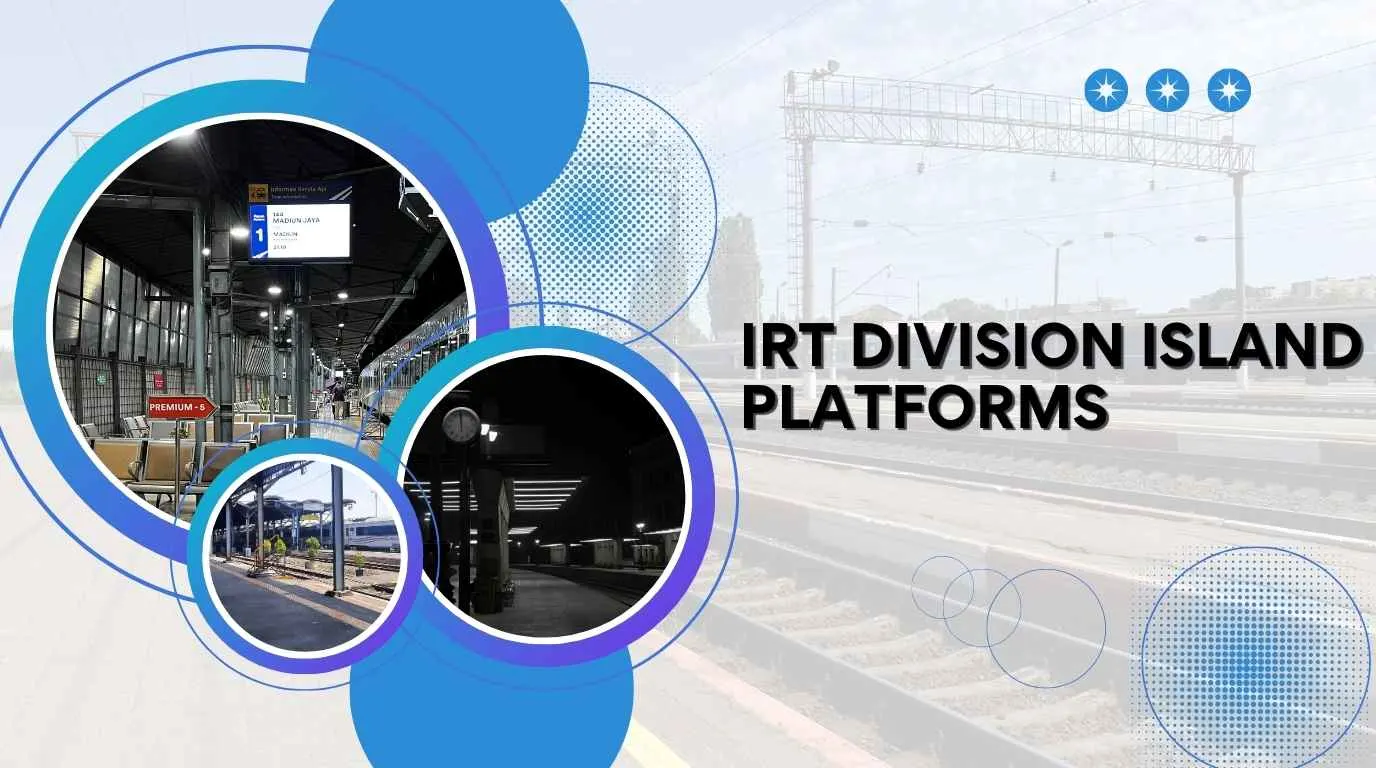
The oldest section of the system is the IRT Division (the A Division) in the New York City Subway. The numbered lines such as the 1, 2, 3, 4, 5, 6, 7, and 8 are found in this division. The Island Platform design is one such very interesting aspect of these stations. In contrast to a side platform where the tracks are centrally located, an island platform is centrally located and trains are operating on both sides. This disposition is quite popular in express stations, such as Grand Central or 72nd Street. It enables the passengers to move on either local or express trains with the push of a button by simply crossing the floor. These platforms can be crowded and claustrophobic as the IRT trains are smaller and shorter than the other divisions. These beautiful mosaic tiles and old iron pillars that still adorn many of these stations dated to the early 1900s reflect the rich history of Manhattan and the Bronx.
IRT Division Island Platforms Highlight
| Feature | Details |
| Subway Division | IRT (Interborough Rapid Transit) Division |
| Platform Type | Island Platform |
| Platform Layout | One central platform serving trains on both sides |
| Common Use | Express and local stations |
| Passenger Benefit | Easy transfers between directions |
| Space Efficiency | Uses less space than two side platforms |
| Crowd Management | Helps handle high passenger volume |
| Accessibility | Easier to add elevators and ramps |
| Typical Location | Busy Manhattan and Bronx stations |
| Express Service Support | Allows express and local trains to stop at same platform |
| Transfer Convenience | Riders can switch directions without changing platforms |
| Safety Advantage | Fewer stairways and platform edges to manage |
| Peak Hour Use | Very high during rush hours |
| Night Service | Used for local-only service when express stops |
| Maintenance Access | Easier track access from one platform |
| Operator | Metropolitan Transportation Authority |
IRT Division Island Platform Stations
- 96 St
- 72 St
- 59 St–Columbus Circle
- Times Sq–42 St
- 34 St–Penn Station
- 14 St
- Chambers St
- 125 St
- 59 St
- 86 St
- Grand Central–42 St
- Brooklyn Bridge–City Hall
- 161 St–Yankee Stadium
- Atlantic Ave–Barclays Center
- Franklin Ave–Medgar Evers College
- Crown Heights–Utica Ave
- Borough Hall
- Eastern Pkwy–Brooklyn Museum
- East 180 St
- 149 St–Grand Concourse
- Gun Hill Rd
- Pelham Pkwy
- Burnside Ave
- 167 St
- 74 St–Broadway
- 61 St–Woodside
- Court Sq
- Queensboro Plaza
IRT Division Island Platforms Schedules
IRT Division Island Platforms Weekday Schedules
Morning and Evening Rush Hour During the busiest times (6:30 AM to 9:30 AM and 3:30 PM to 8:00 PM), the trains come very fast. You will rarely wait more than a few minutes on an island platform.
| Train Line | Rush Hour Frequency | Wait Time (Average) |
| 1 Train | Every 2 to 4 minutes | 3 minutes |
| 2 Train | Every 5 to 7 minutes | 6 minutes |
| 3 Train | Every 5 to 7 minutes | 6 minutes |
| 4 Train | Every 4 to 5 minutes | 4 minutes |
| 5 Train | Every 4 to 6 minutes | 5 minutes |
| 6 Train | Every 2 to 4 minutes | 3 minutes |
| 7 Train | Every 2 to 3 minutes | 2 minutes |
IRT Division Midday and Evening Schedules
Quiet Hours Travel Between 9:30 AM and 3:30 PM, the city is a bit quieter. The trains still run often, but you might have to wait a little longer.
| Service Type | Time Period | Frequency (Mins) |
| Midday (Mon-Fri) | 9:30 AM to 3:30 PM | Every 6 to 8 mins |
| Evenings (Mon-Fri) | 8:00 PM to Midnight | Every 10 to 12 mins |
| S (42nd St Shuttle) | Daytime | Every 2 to 5 mins |
IRT Division Weekend Service Patterns
Saturday and Sunday Travel On weekends, there is no "Rush Hour." Many IRT lines run every 8 to 12 minutes. Be careful because sometimes Express trains (like the 4 or 2) will run as Local trains due to track work.
| Train Group | Saturday Frequency | Sunday Frequency |
| Lines 1, 6, 7 | Every 6 to 8 minutes | Every 8 to 10 minutes |
| Lines 2, 3, 4, 5 | Every 8 to 12 minutes | Every 10 to 12 minutes |
Late Night IRT Service Table
Traveling After Midnight The NYC Subway runs 24 hours a day, but after Midnight, service is much slower. The 42nd St Shuttle (S) stops running around 12:00 AM.
| Line Number | Service Pattern (12 AM - 6 AM) | Wait Time |
| 1 Train | Runs Local (all stops) | 20 minutes |
| 2 Train | Runs Local in Bronx/Brooklyn | 20 minutes |
| 3 Train | Often runs as a short Shuttle | 20 minutes |
| 4 Train | Runs Local (Manhattan/Bronx) | 20 minutes |
| 5 Train | Shuttle in the Bronx only | 20 minutes |
| 6 Train | Runs Local (all stops) | 20 minutes |
| 7 Train | Runs Local (all stops) | 20 minutes |
Top Safety Tips for First-Time IRT Riders
Mind the Gap
Because IRT trains are older and narrower, the space between the island platform and the train can be large. Always look down at your feet before you step into the car.
Stand Behind the Yellow Line
Island platforms are narrow and have trains on both sides. Never stand near the edge. Always stay in the center area near the pillars until the train comes to a full stop.
Middle Car is the Safest
If you are traveling late at night, look for the Conductor's Car. This is usually in the middle of the train. You will see a small board with black and white stripes hanging from the ceiling where the conductor looks out.
Avoid Empty Train Cars
If you see a train car that is completely empty during a busy time, there is usually a reason (like a bad smell or no AC). It is better to board a car that already has other passengers.
Keep Your Bags in Front
When the island platform is crowded, wear your backpack on your chest or hold it between your legs. This prevents pickpockets and gives more space for others to walk past you.
IRT Division Island Platforms Etiquette
Let People Off First
This is the #1 rule in NYC. Stand to the side of the train doors and wait for everyone to exit before you try to get on. If you block the door, people will get annoyed!
Do Not Block the Stairs
On an island platform, the stairs are often right in the middle. After you get off the train, move quickly away from the stairs so you don't create a "human traffic jam."
No "Pole Hugging"
When you get inside the train, do not lean your whole body against the silver poles. Other people need to hold those poles so they don't fall when the train moves.
The Silent Rule
New Yorkers usually don't make eye contact or talk to strangers on the subway. If you need help, look for an MTA worker in a uniform or use the Help Point intercom on the platform.
Move to the Center
When you board the train, don't stand right by the door. Move into the middle of the car. This allows more people to get on and makes the trip faster for everyone
Major Transfer Hubs for IRT Island Platforms
Times Square–42nd Street (The Biggest Hub)
From this island platform, you can connect to almost every line. You can jump from the 1, 2, or 3 trains to the 7 train or the N, Q, R, W lines. It is very busy, so always follow the overhead signs.
Grand Central–42nd Street (East Side Hub)
This is the best place to switch from the 4, 5, or 6 trains to the 7 train. It also connects to the Metro-North Railroad if you want to leave the city and go to Connecticut or upstate New York.
Fulton Street (Lower Manhattan Hub)
This station is very modern. From the 4 and 5 island platforms, you can walk through a beautiful tunnel to reach the A, C, J, Z, and R trains. It is the best way to get to the World Trade Center.
Atlantic Avenue–Barclays Center (Brooklyn Hub)
If you are in Brooklyn, this is the main spot. The 2, 3, 4, and 5 trains all meet here. You can also catch the LIRR (Long Island Rail Road) from this location.
161st Street–Yankee Stadium (Bronx Hub)
For sports fans, this is the place to be. You can take the 4 train and transfer to the B or D trains to see a baseball game or explore the Bronx.
Best Apps for Travelers: IRT Division Edition
The Official MTA App (Everything in One)
This is the most important app for your phone. It shows a Live Map of all the 1, 2, 3, 4, 5, 6, and 7 lines. You can see the trains moving in real-time. If an island platform is too crowded, the app will tell you to wait for the next train.
Google Maps (Best for Directions)
Everyone knows Google Maps. In New York, it is great because it tells you which IRT exit is closest to your hotel. It also shows you if there is heavy traffic on the 7 train before you leave your room.
Citymapper (Best for Step-by-Step Help)
This app is like a "Local Friend." It tells you exactly where to stand on the island platform so you are right in front of the exit stairs. This saves a lot of time and walking in huge stations like Grand Central.
Transit App (Best for Bus and Train Sync)
If you need to take a bus and then an IRT subway, this app is the best. It shows the countdown for both. It works perfectly with the OMNY system because it helps you use your 2-hour free transfer window wisely.
OMNY.info (The Money Tracking App)
While not a traditional map app, the OMNY website is a "Web App" you must use. You can log in and see how many dollars you saved with Fare Capping. It shows you if your Indian bank card was accepted at the subway gate.
FAQs
Q. Which subway lines use IRT island platforms?
Island platforms are mainly used on IRT lines such as 1, 2, 3, 4, 5, 6, and 7.
Q. Why are island platforms common on IRT lines?
They help manage heavy passenger traffic, save space in narrow tunnels, and make express service easier to operate.
Q. Can I switch directions on an island platform?
Yes, you can usually change direction without using stairs, since both trains stop on the same platform.
Q. Are island platforms used at express stations?
Yes, most IRT express stations use island platforms so local and express trains can stop side by side.
Q. Do island platforms stay open late at night?
Yes, island platforms stay open 24 hours, just like other subway platforms, though trains run less often at night.
Q. Are island platforms easier for transfers?
Yes, they make transfers simpler and faster, especially during rush hours.
Q. Who manages IRT Division platforms?
They are operated and maintained by the Metropolitan Transportation Authority.